

Key Takeaways
- EUR/USD drifting near 1.1726 after failing to sustain above 1.1800.
- Immediate support at 1.1700; key resistance in the 1.1750–1.1800 range.
- Euro-area PMIs show stabilization: manufacturing at 49.5, services at 50.5.
- ECB expected to pause tightening with one final cut in September; Fed cuts now seen later.
- FOMC minutes, U.S. inflation prints, ECB Sintra remarks, and the July 9 tariff deadline are this week’s main catalysts.
Market Dynamics and Recent Performance
EUR/USD has retreated to around 1.1726 after testing the 1.1800 area last week, as the U.S. dollar finds support from expectations of Federal Reserve rate cuts being delayed into year-end. A Reuters poll shows the greenback under pressure from mounting U.S. debt and erratic tariff policies, fueling an 11% year-to-date decline against major peers, including the euro’s roughly 14% gain this year. The looming July 9 deadline for a U.S.–China tariff truce has injected intermittent volatility: talk of renewed duties has briefly bolstered the dollar, while every hint of extension eases upward pressure on EUR/USD. On the euro side, the single currency has remained resilient amid signs of stabilization in euro-area factory orders and a modest rebound in services, preventing a slide below key support at 1.1700.
Technical and Fundamental Influences
From a technical standpoint, EUR/USD is grappling with resistance in the 1.1750–1.1800 zone, where its 100-day exponential moving average and prior swing highs converge, in the 1H chart.
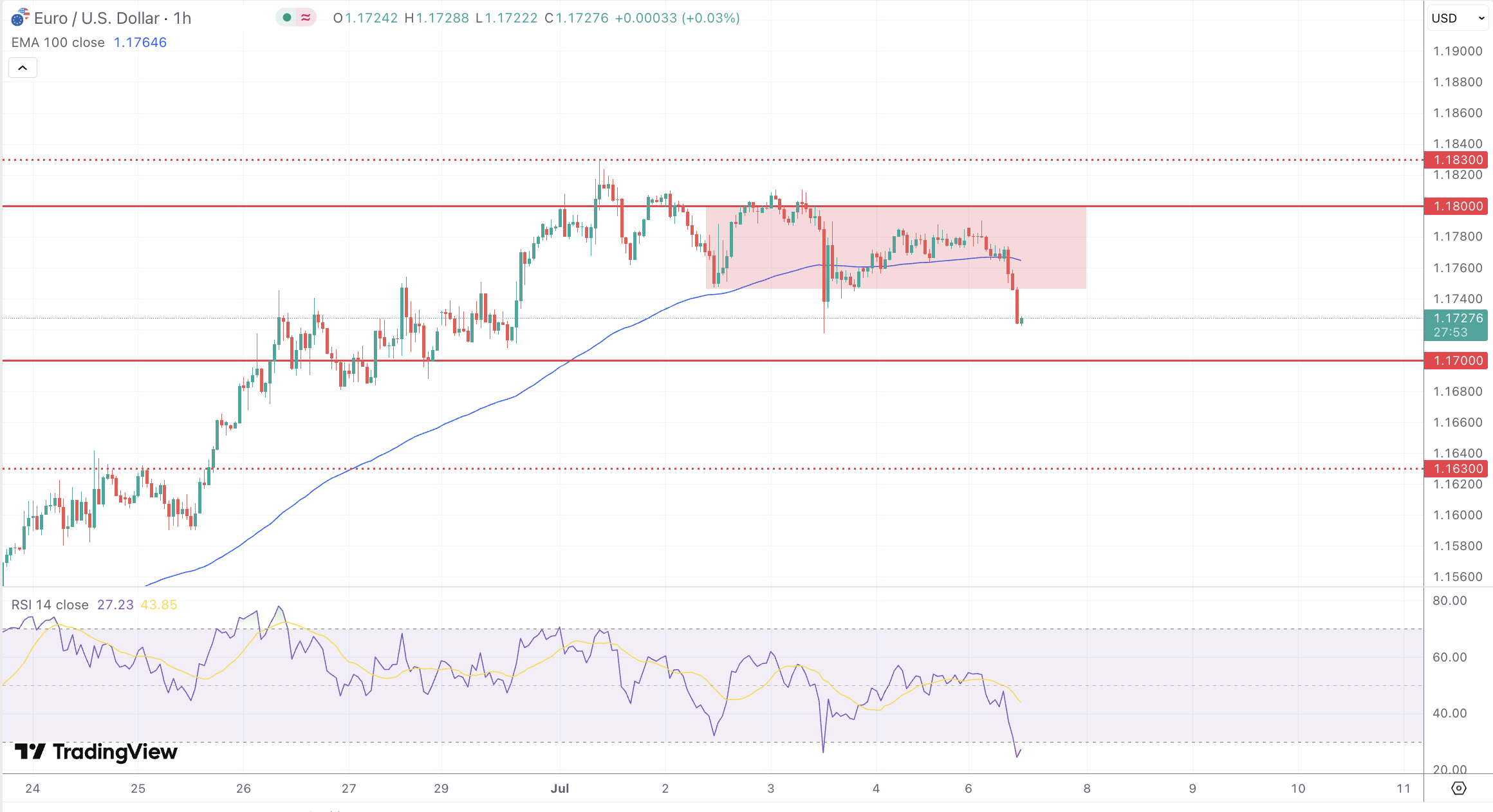
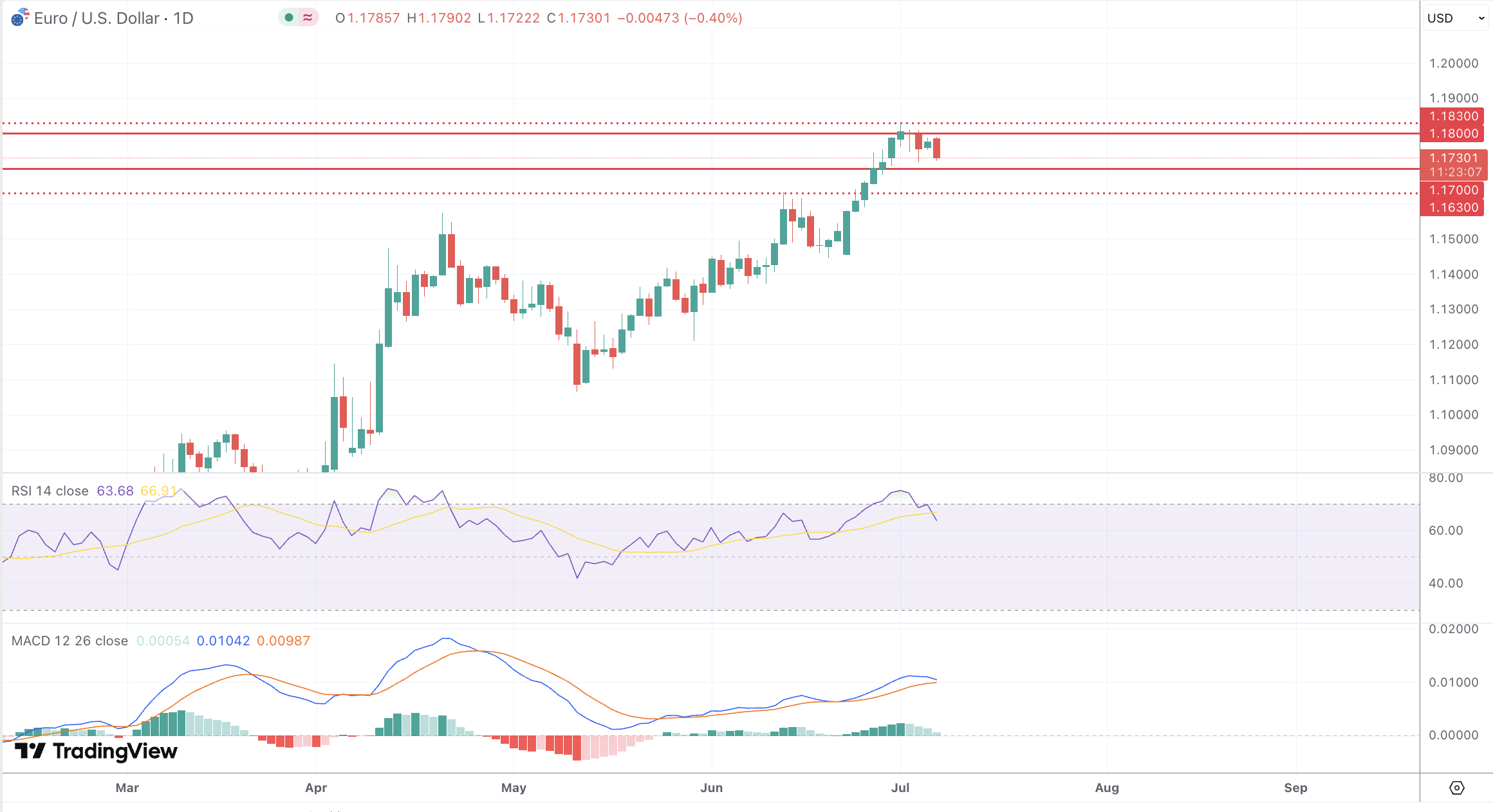
Momentum indicators on the daily chart are mixed: the RSI hovers just above 60, coming out of an overbought territory, while the MACD sits near its signal line, hinting at an indecisive near-term outlook. Initial support lies at 1.1700, with a break below opening the way toward the June low around 1.1630; to the upside, surpassing 1.1800 would be needed to clear the path toward 1.1850.
Fundamentally, the euro-area economy shows tentative signs of life. June’s manufacturing PMI ticked up to 49.5—the first stabilization in new orders in over three years—while the services PMI edged into growth at 50.5, lifting the composite to a three-month high of 50.6. Inflation in the bloc has eased to the ECB’s 2% target, prompting forecasts for a final rate cut in September. By contrast, U.S. inflation remains elevated above 3%, and Fed officials have signaled caution over external price pressures, keeping real yields on U.S. Treasury notes more attractive than their European counterparts.
Looking Forward
Traders will parse Wednesday’s FOMC minutes for clues on whether the Fed leans toward earlier or later rate reductions, a key driver for the dollar and hence EUR/USD. Later in the week, U.S. CPI and PPI data will further clarify the U.S. inflation trajectory. On the euro side, comments from ECB speakers at the Sintra forum and Germany’s July industrial production and retail sales figures stand to influence sentiment. The July 9 tariff deadline looms large—any escalation could swiftly reverse the euro’s gains, while an extension would likely see EUR/USD re-test the 1.1800 barrier. Geopolitical risks, including Middle Eastern tensions, may act as wildcards by intermittently pushing flows into traditional safe havens like the dollar.