

Key Takeaways
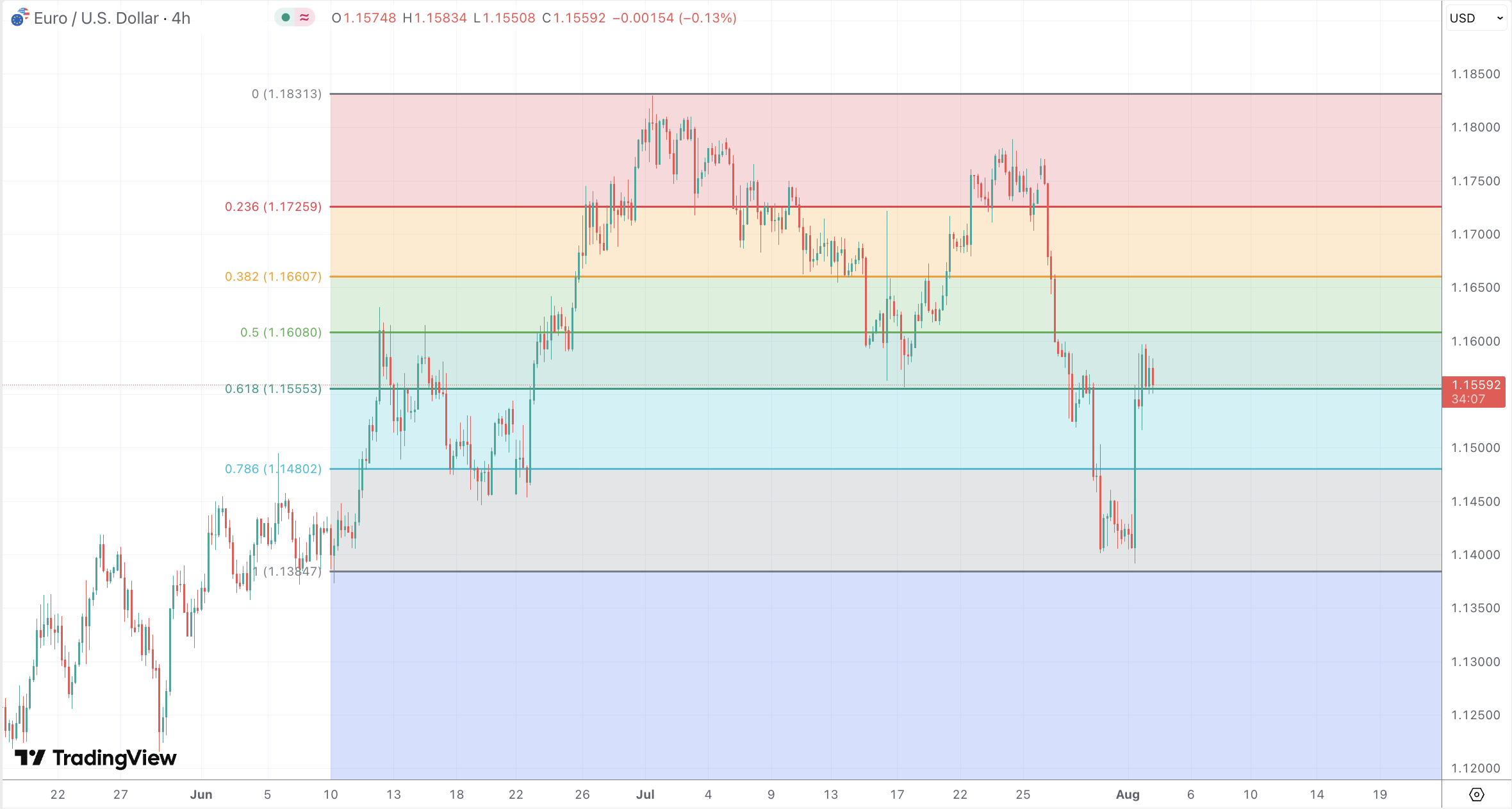
- EUR /USD declined from its four-year peak near $1.1830 to $1.1522 amid a new U.S.–EU trade deal imposing 15% tariffs.
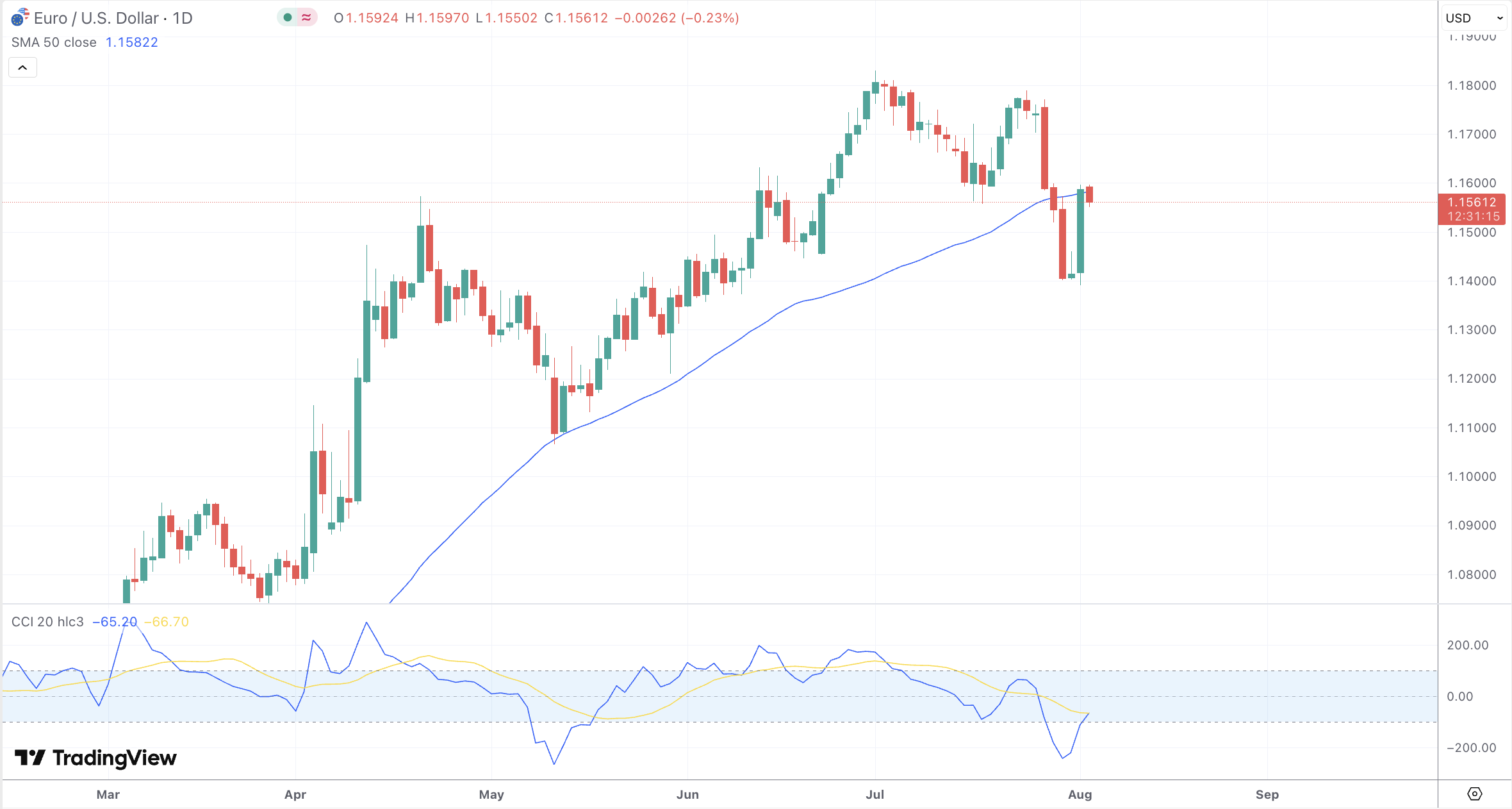
- The pair sits below its 50-day SMA (~1.1582), with the 50% Fibonacci retracement (~1.1600) now offering resistance.
- CCI oversold readings (~–120) point to a possible corrective bounce toward 1.1650.
- S. labor-market surprises and Fed rate-cut expectations continue to underpin dollar strength.
- This week’s Eurozone CPI and German economic data are pivotal; a strong print could re-energize EUR /USD, while soft figures may push it back toward 1.1447.
Market Dynamics and Recent Performance
The euro has weathered choppy seas this past week, pulling back from multi-year highs as a recently inked U.S.–EU trade agreement imposed a 15% tariff on key European exports, denting confidence in the single currency’s rally. After peaking near $1.1830 on July 22, EUR /USD slipped to $1.1522 by July 29, marking its steepest two-day drop in nearly three years as traders unwound crowded long positions amid shrinking risk appetite. July also saw the U.S. dollar rebound broadly, gaining 2.1% and on track for its best July performance since 2019, driven by improved U.S. trade deals and position-squeeze dynamics, reinforcing headwinds for EUR /USD.
Technical and Fundamental Influences
On the charts, EUR /USD has broken below its short-term uptrend channel, turning the 50% Fibonacci retracement of June’s advance (around 1.1600) into near-term resistance. The pair now trades just below its 50-day simple moving average near 1.1582, with a failed retest of that level underscoring the shift from bullish conviction to consolidation.
The Commodity Channel Index (20-period) has recovered from an oversold low near –230 on July 31 and now sits around –65, firmly within neutral territory. This suggests the June–July corrective phase has lost momentum, but lacks fresh directional conviction. The Relative Strength Index (14-period) also confirms consolidation, reading 47, squarely between its 30/70 thresholds. Meanwhile, ATR (14) at 0.0062 indicates average daily moves of roughly 62 pips, pointing to a contained trading range.
Fundamentally, U.S. labor data continue to shape the outlook. Friday’s Non-Farm Payrolls surprise, just 73,000 new jobs versus a 110,000 consensus, stoked talk of an earlier Federal Reserve rate cut, yet the dollar’s post-report rally underscores lingering bets on resilient U.S. yields. On the Eurozone side, Q2 German GDP contracted 0.1%, while France and Italy posted tepid growth, elevating concerns that the European Central Bank may lag the Fed in policy normalization.
Looking Forward
This week’s calendar features EU Consumer Confidence (Tuesday) and Eurozone CPI (Wednesday), which will test whether Euro-area data can arrest the slide. On the U.S. front, ISM Services PMI and jobless claims will influence Fed rate-cut timing expectations. Should Eurozone inflation overshoot forecasts or German factory orders surprise to the upside, EUR /USD could aim for a retest of 1.1650. Conversely, a dovish ECB statement or softer European data may drag prices toward the 1.1447–1.1500 zone, the latter reinforced by both the 200-hour moving average and last week’s low