

Key Takeaways
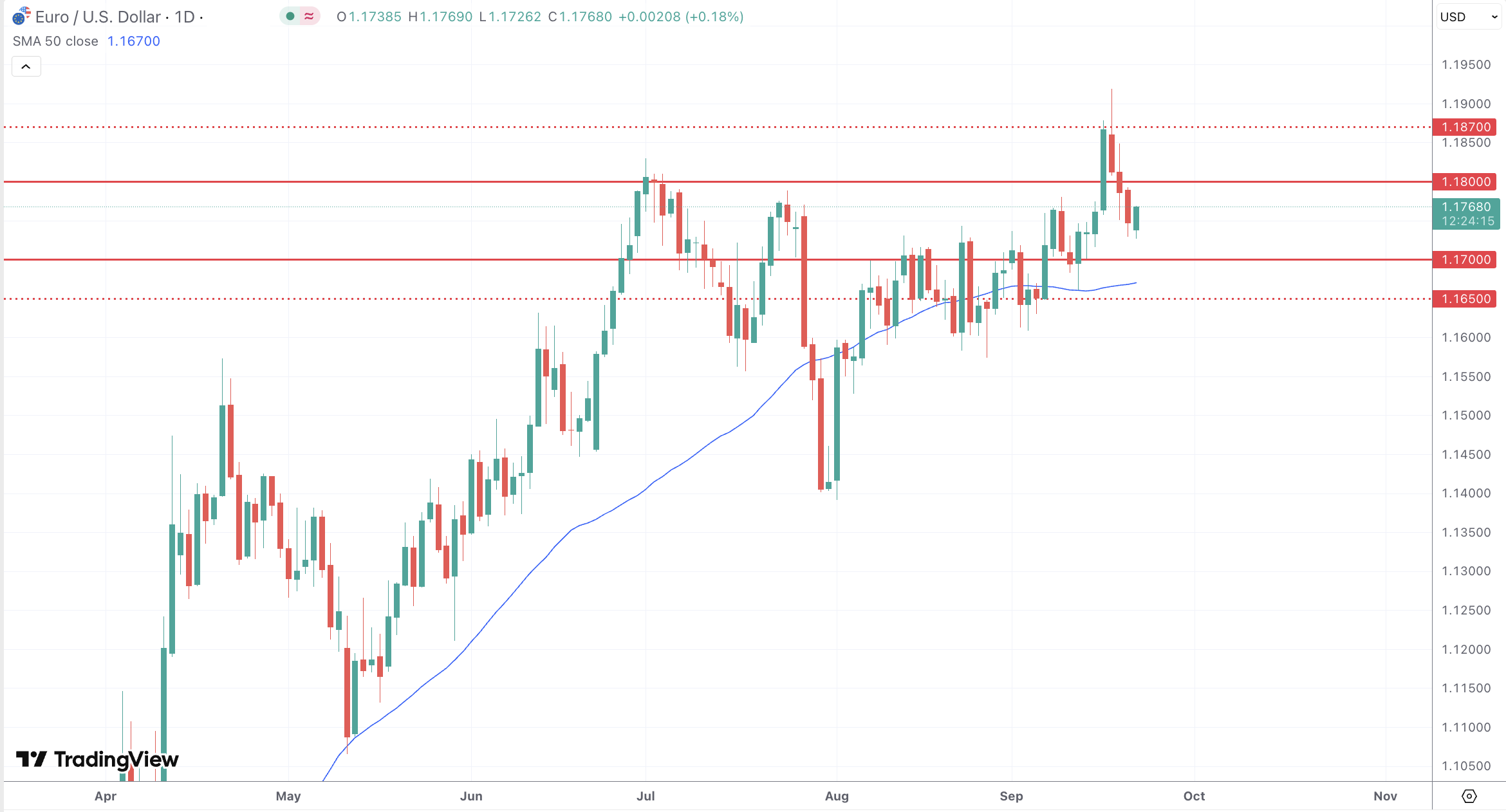
- EUR/USD faces resistance between 1.1800–1.1820; a break above opens potential toward 1.1850-1.1880 or higher.
- Key support lies around 1.1700-1.1720, with deeper support in 1.1650-1.1680 if that zone fails.
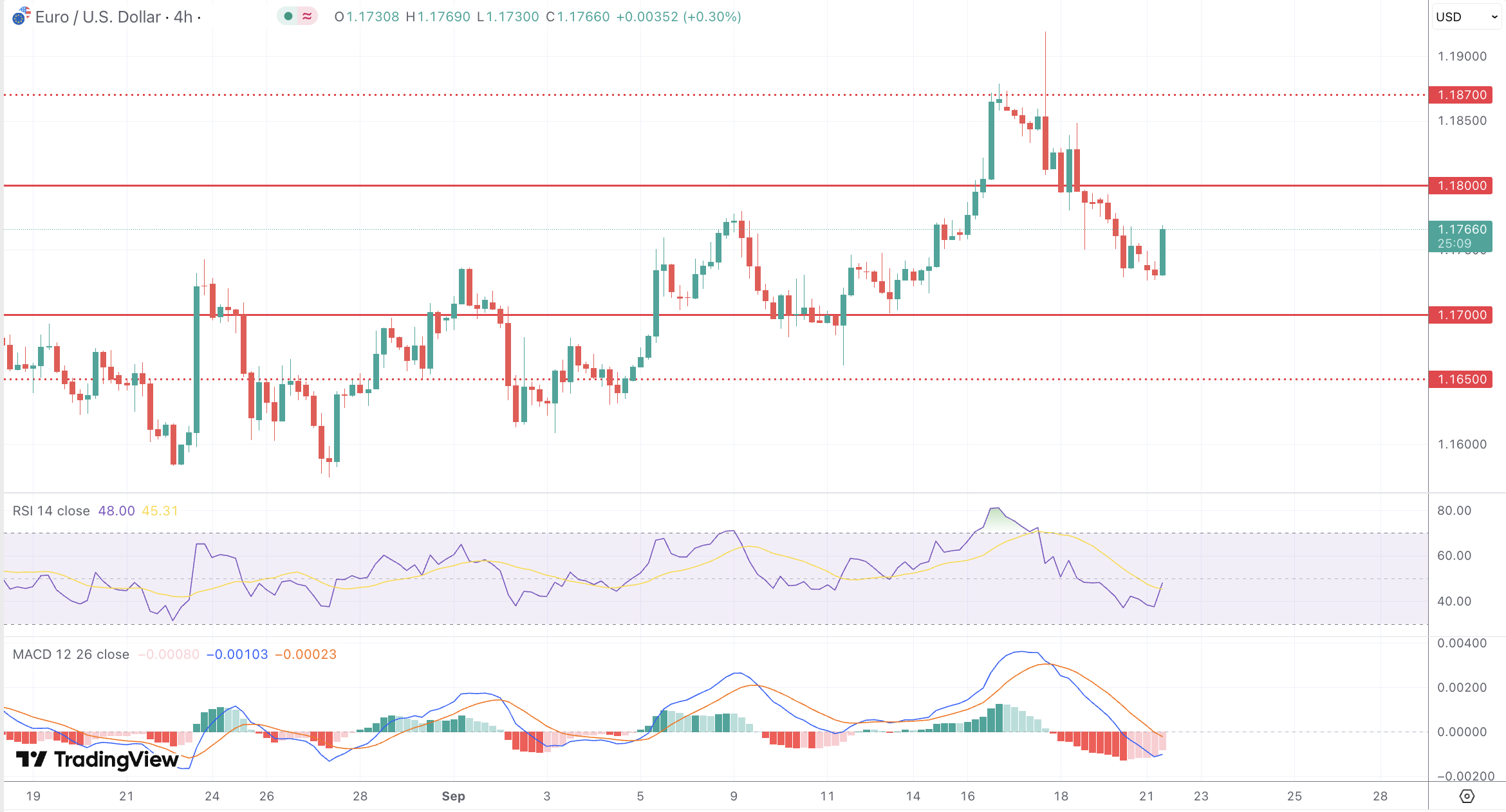
- Technical indicators are mixed, showing possible weakness in upside momentum unless refreshed by strong fundamentals.
- ECB appears constrained and wants to avoid disinflation risk from a strong euro; Fed remains in control of near-term directional bias.
- S. inflation data and Fed speeches are likely to be the main catalysts determining whether EUR/USD moves higher or lower this week.
Market Dynamics and Recent Performance
EUR/USD has cooled down from its recent highs around 1.1900+, drifting lower to trade in the 1.17–1.18 area. The U.S. dollar has regained some strength as markets adjust expectations for the Federal Reserve’s future policy path. Fed speeches and data releases are being scrutinized, pushing USD higher when expectations of rate cuts are delayed or softened. On the Euro side, mixed signals are coming from the ECB: inflation is easing somewhat but remains sticky in core components, growth is weak, and consumers are acting cautiously, especially in view of external risks like tariffs. This uncertainty is weighing on the euro, preventing bullish momentum from becoming more sustained.
Technical and Fundamental Influences
From the technical side, a few key levels stand out. Resistance is capping upside near 1.1800–1.1820, a zone that’s repeatedly prevented sustained rallies. If EUR/USD breaks through that convincingly, the next resistance sits in the 1.1850–1.1880 region. On the downside, immediate support is around 1.1700–1.1720; a break below that could expose 1.1650–1.1680 as the next zones where buyers might show up.
Indicator readings are mixed. On shorter timeframes, momentum oscillators show slight bearish bias; price has lost some upward momentum, and there are early signs of bearish divergences. Moving averages of mid-term periods are flattening, suggesting consolidation unless new catalysts arrive.
On fundamentals, the divergence between the Fed and the ECB is increasingly important. The Fed is being pressured to justify its pace of easing, while the ECB seems more constrained: inflation is now forecast at about 2.1% for 2025, slowly declining, but still with risk of being pushed by external factors like trade policies and strong euro strength. ECB officials have suggested that further easing is not imminent, that some rate cuts may be “nearly concluded,” and the euro’s strength could itself become a disinflationary headwind.
Meanwhile, expectations are that the U.S. inflation data (CPI, PCE) this week could either support continued USD strength (if inflation surprises to upside) or give EUR some relief (if inflation softens). Fed’s speakers are also in focus.
Looking Forward
For EUR/USD to recover, it needs a convincing break above 1.1800–1.1820, supported by dovish Fed cues or softer-than-expected U.S. data. If that happens, gains toward 1.1850–1.1880 look possible, potentially pushing toward 1.1900 if momentum builds.
On the flip side, if U.S. inflation surprises on the high side or Fed speeches lean hawkish, USD might strengthen, sending EUR/USD down toward 1.1700–1.1720. A break lower could expose 1.1650–1.1680, and in a more extreme case, 1.1600 might be tested if risk sentiment worsens or U.S. yields spike.
Key upcoming events this week include U.S. inflation releases (CPI, PCE), Fed official speeches, and any further ECB commentary clarifying its next moves. Also worth watching: euro-zone consumer behavior, inflation expectations, and trade policy risks which could affect both inflation and growth in Europe.