

主要ポイント
- 日足チャートでは、金価格は$4,674で取引されており、米国とイランの和平交渉が未解決のままであることや、インフレ懸念が金利見通しを圧迫していることから、$41(0.88%)の下落を記録している。
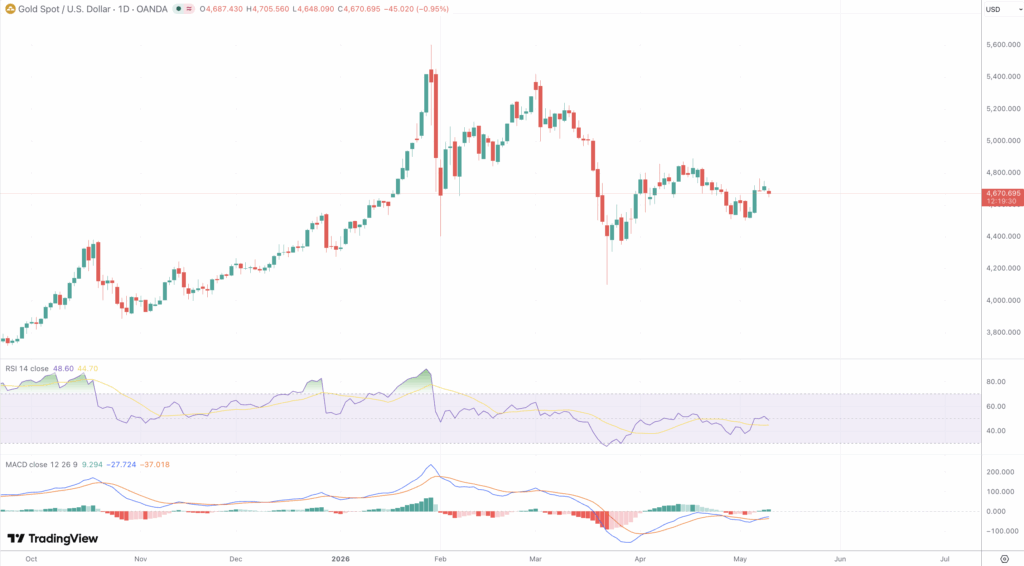
- RSI-14は44.72のシグナルラインに対し48.84を記録しており、ペアは中立圏に位置しています。RSIが平均線を上回ったことは、短期的には一時的な安定を示唆しています。
- 価格は、1月につけた過去最高値(約$5,500)から3月の安値(約$4,100)までを引いたフィボナッチ・リトレースメントの61.81%水準(約$4,635)をわずかに上回って推移しており、このゾーンが今週の重要な構造的サポートとなっている
- 日足の時間足でMACDは-13.10であり、絶対値では依然として弱気ですが、ヒストグラムの勢いは弱まっており、下落圧力が勢いを失っていることを示唆しています。
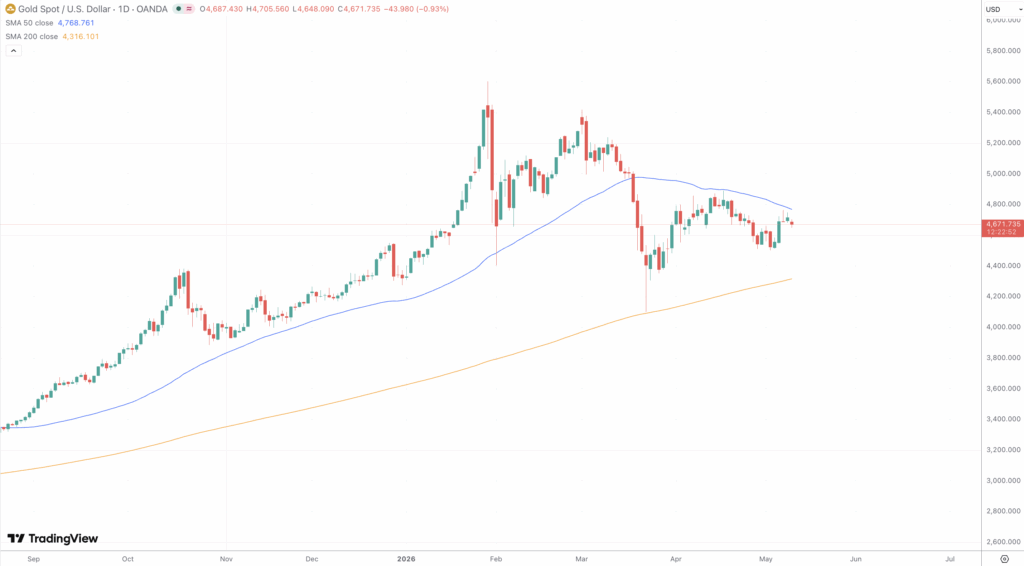
- $4,762にある50日移動平均線が直近の上値抵抗線として機能しており、$4,665にある5日移動平均線は現在、現物価格とほぼ一致している
- 今週の主要なマクロ経済の材料は、4月CPI(5月12日)、PPI(5月13日)、新規失業保険申請件数(5月14日)です。
- ゴールドマン・サックスは年末の目標株価を5,400ドルと据え置いている。モルガン・スタンレーとJPモルガンは、年半ばまでに5,200ドルから5,300ドルに達すると見込んでいる。ロイターのコンセンサス予想では、2026年通年の目標株価は4,916ドルとなっている。
- イラン情勢が未解決である限り、$4,400~$4,800という短期から中期的な取引レンジが、機関投資家部門の間で実勢レンジとして広く言及されている
市場動向と直近のパフォーマンス
2026年の大半において、金価格は記録上最も異例な上昇局面の一つからの調整局面が続いている。中央銀行による積極的な買い入れ、世界的な利下げサイクル、そして高まる安全資産需要に後押しされ、2025年を通じて65%近く急騰した後、金価格は1月下旬に$5,500付近でピークを迎えたが、その後、一連の強力なマクロ経済的ショックにより急反落した。 転換点は2月28日に訪れた。この日、米国とイスラエル軍がイランの軍事インフラへの攻撃を開始し、ホルムズ海峡が封鎖されたことで、国際エネルギー機関(IEA)が「世界石油市場史上最大の供給混乱」と形容する事態が引き起こされた。.
イラン情勢は金価格を押し上げるどころか、2025年を通じて金相場を支えてきた利下げ期待という追い風を打ち砕いた。ブレント原油価格が1バレルあたり約$70ドルから$126ドル超のピークまで急騰したことで、FRBの金融緩和サイクルはイールドカーブからほぼ完全に織り消された。 CMEのFedWatchツールによると、6月の会合で政策金利が3.50~3.75%で据え置かれる確率は現在95.81%となっており、年末までの利上げを市場が織り込む確率はすでに利下げの確率を上回り始めている。この構造的な変化が、利回りのない金価格にとって持続的な重しとなっている。.
金は2月の高値から約1,400ドル下落した後、3月に1,410ドル付近で底を打った。 停戦への期待が高まるにつれて1,470ドル台への回復が見られ、パキスタンの仲介者を通じて伝えられた米国の覚書により、金価格は一時1,470ドルを上回り、WTIは190ドルを下回り、ブレントは100ドルを下回った。 しかし、その楽観ムードは短命に終わった。その後、イランがホルムズ海峡で船舶を攻撃し、UAEの石油港を炎上させたため、5月4日には金価格が2.61%下落した。 今週の金価格は$4,674ドルでスタートした。OECDは2026年の米国のインフレ率を4.2%と予測しており、シカゴ連銀のオースタン・グルスビー総裁は、インフレが2%の目標に向けて冷却し続けていないと警告している。.
テクニカル要因とファンダメンタル要因
価格は、50日移動平均線($4,762)および200日移動平均線($4,315付近)の下方で調整局面に入っており、その直下には5日移動平均線($4,665)が位置しているため、この通貨ペアは狭いレンジに押し込められています。歴史的に見ても、このような状況はその後、大きな方向性のある動きに先立って生じる傾向があります。 日足ローソク足が安値で引ける前に、セッション高値の$4,705が50日SMAとほぼ一致しており、この水準が上値の売り圧力として機能していることを裏付けています。.
RSI-14は48.84、シグナルラインは44.72を記録しています。紫色のRSIラインは、2025年9月下旬と2026年4月中旬に短期的な反発の前に現れたクロスオーバー形成と同様に、黄色い平均線の上を再びクロスしました。RSIとそのシグナルラインの間の緑色のシェーディングは、注意深く監視する価値のある短期的な方向性シグナルとして再確立されました。MACDは-13.10でテクニカルには弱気ですが、ヒストグラムの強気な収束を示しており、マイナスバーは徐々に縮小しています。ゼロラインを上にブレークすることが確認されれば、短期的なバイアスの大幅なシフトを表すでしょう。.
1月サイクルの高値付近($5,500)から3月のスイング安値付近($4,100)までのフィボナッチ分析によると、23.6%の戻り水準は$5,170、38.2%は$4,965、 50.1%の中間点は$4,800、61.81%の黄金比レベルはおよそ$4,635、78.61%の拡張レベルは$4,400付近となります。 現在の価格$4,674は61.8%水準をわずかに上回っており、強気回復のシナリオを裏付けるには、$4,635を上回る日足終値が持続することが不可欠となる。 $4,780~$4,800付近のボリンジャーバンドの中央線は、ベースケースのテクニカルな回復目標を示しており、価格は現在バンド構造の下半分で推移している。ADXは3月のピークから方向性の強さが鈍化しており、負のDIが依然として優勢ではあるものの、正のDIに対するリード幅は縮小しており、これはMACDの減速と一致している。 ATRは依然として高水準にあり、CPIおよびPPI発表期間中の日中の値幅が広くなることを示唆している。OBVは、$4,550から$4,740の調整局面において、機関投資家による漸進的な買い集めを反映している。一方、パラボリックSARは弱気モードで価格の上方に位置しており、反転するには数回連続した上昇セッションが必要となるだろう。 $4,557のスイング安値と$4,740の反発高値の両方で出現したドージ(十字線)は、レンジの両極端における方向性の迷いを示しており、明確な方向性への決着には十分な規模の触媒が必要であることを裏付けている。.
5月12日に発表される4月の消費者物価指数(CPI)が、今週の主要な材料となる。数値が堅調であれば、FRBによる利上げ見送りや利上げの長期化への観測が固まり、ドル高や米国債利回りの上昇を招くことになる。これらはいずれも金価格にとって直接的な逆風となる。一方、数値が軟調であれば、利下げ観測が再燃し、$4,800ドルの水準を試すきっかけとなる可能性がある。 4月の雇用統計は、予想の6万2000人を上回る11万5000人となり、このデータ発表を控えてFRBの慎重な姿勢を裏付ける結果となった。機関投資家の見通しとしては、ゴールドマン・サックスは、中央銀行による米ドルからの分散投資を背景に、年末までに$5,400ドルに達すると予測している。調査対象となった中央銀行の約70%が、今後12ヶ月間で世界の金準備高が増加すると見込んでいる。 モルガン・スタンレーは、米イラン間の緊張緩和が継続することを前提に1,520ドルを目標値としており、JPモルガンは年半ばまでに1,520~1,530ドルと予測している。また、ロイターが31人のアナリストを対象に行った調査では、2026年通年の平均価格は1,4916ドルと見込まれている。.
今後の見通し
今週の金相場は、明確な二極化の構図を呈している。CPIが予想を下回る結果となり、かつ米イラン間の緊張がさらに緩和されれば、フィボナッチ・リトレースメントの50.8%水準である$4,800や、$4,828付近の統計的な抵抗線への回復が後押しされるだろう。 対照的なシナリオとして、CPIの予想を上回る高値と中東情勢の再燃が重なれば、$4,635、そして最終的には$4,400に向けた下落圧力が強まることになる。.
$4,635の水準は、61.8%のフィボナッチ・リトレースメントと一致しており、今週の重要な節目となります。この水準を下回って日足で引けた場合、$4,557、そして78.6%のリトレースメントと機関投資家のサポートゾーンが重なる$4,400付近への下落が想定されます。 上値では、$4,712~$4,740のレンジを突破すれば、短期的なバイアスは強気に転じ、$4,800が目標となり、その上には$4,876が次の売りゾーンとして控えています。確信を持って買いを入れるには、パラボリックSARが価格を下回って反転し、MACDがゼロラインを上抜けるというテクニカルな確認シグナルが先行する必要があります。.
中央銀行による構造的な需要、貿易加重ドルの軟調、そして根強い機関投資家のコンセンサス――これらすべてが、積極的な弱気ポジションの構築を阻む要因となっている。 和平合意を伴わない停戦による膠着状態により、当面は1,440~1,480ドルのレンジが維持される見通しであり、今週発表されるマクロ経済指標によって、どちらのレンジ上限が先に試されるかが決まるだろう。RSIがシグナルラインを上回って推移し、MACDの弱気ヒストグラムが縮小していることから、指標発表を控えた現状では、抵抗が最も少ない方向として、相場は小幅ながら安定化に向かう傾向にある。.


