

Key Takeaways
- EUR/USD is trading around 17–1.173 after a rebound from recent support, aided by U.S. dollar softness and shutdown concerns.
- The fall from the 1.1917 high extended into 1.1644, making that level a pivotal support.
- Resistance zones: 1734, then 1.1819. Breaks above would favor continuation of the rally.
- Support zones of interest: 1667 (55 DMA), and deeper 1.1390 if the decline intensifies.
- Technical warning: MACD divergence and failure below 55-day EMA signal caution.
- Macro catalysts: U.S. data prints, Fed/ECB commentary, and shifts in dollar sentiment.
Market Dynamics and Recent Performance
The euro-dollar pair began the week trading around 1.1724, continuing the modest rebound from recent lows. The U.S. dollar’s weakness, fueled by worries about a possible U.S. government shutdown and scant fresh hawkish catalysts, has lent support to EUR/USD. Investors are also eyeing upcoming U.S. data releases, which could reshape rate expectations and swing momentum in either direction.
The eurozone backdrop remains mixed. Soft manufacturing indicators have raised concerns about downside risks to growth, but resilient services and underlying wage pressures keep inflation watchers on alert. Central bank rhetoric from both the ECB and the Fed may provide directional cues throughout the week.
Technical and Fundamental Influences
From a technical viewpoint, EUR/USD’s structure currently straddles a balance between upside potential and risk of a retracement. The decline from the 2025 high near 1.1917 has been extended toward the 1.1644 zone before a modest recovery. That makes 1.1644 a key pivot: if that level yields, further downside could emerge toward 1.1390 in deeper retracements. On the upside, resistance is stacked near 1.1734, and more decisively around 1.1819, a failure below the former keeps the market in a neutral-to-bearish stance near term.
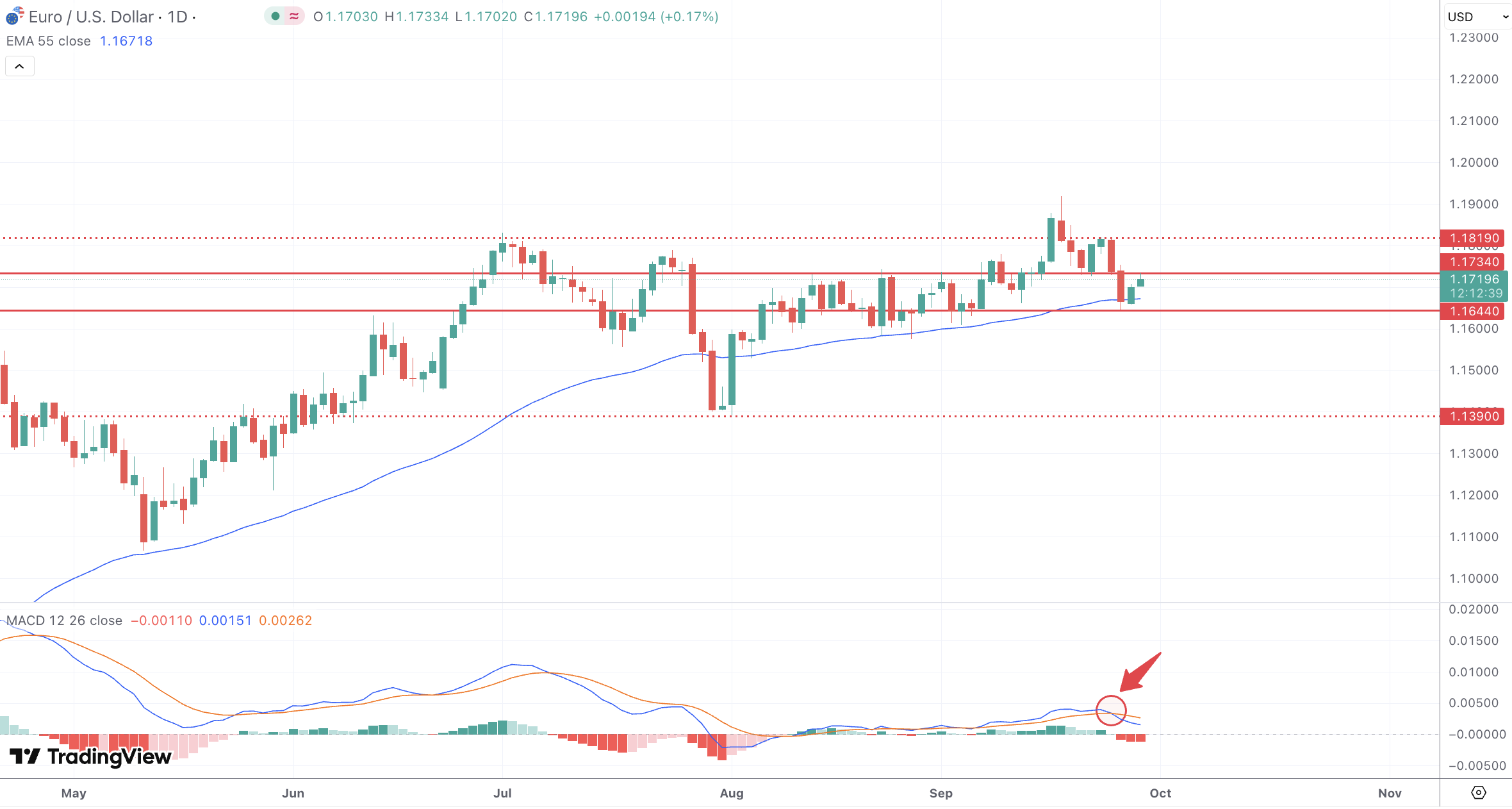
Indicators show warning flags. A divergence in the daily MACD suggests caution on fresh upside, especially if price cannot clear the 55-day EMA (around 1.1667–1.1670). The overall trend from the longer-term low near 1.0176 through the 2025 rally remains intact as long as support holds near 1.1390. Should that support break, it would cast doubt on the strength of the rally and expose deeper medium-term retracements.
Fundamentally, the U.S. dollar’s posture is a big influence. Currency markets continue to price in gradual deterioration in the dollar. A weak growth or inflation print from the U.S. would strengthen euro’s appeal. However, a surprise upward surprise in U.S. GDP or strong labor numbers could re-energize the dollar and drag EUR/USD lower. On the euro side, any hawkish surprises from ECB commentary or firmer-than-expected Eurozone inflation could support upside pushes.
Looking Forward
Navigating EUR/USD this week is about respecting key levels and watching triggers. For bullish scenarios, a clean breach and close above 1.1734 would unlock room toward 1.1819. If that breaks, a run toward 1.1900+ becomes more plausible. If upside fails, the 1.1644–1.1667 region becomes a battleground for dip buyers; but a break there could precipitate correction down toward 1.1390.
Traders should monitor U.S. data releases—especially nonfarm payrolls, ISM indices, and inflation metrics—for surprises. In addition, statements from ECB and Fed officials may tilt the risk bias. Keep stops tight, especially in overextended moves, and consider staggered entries around zone rejections. Until the structure breaks, the bias leans modestly positive, but vigilance is required given the divergences and macro uncertainty.