

Key Takeaways
- EUR/USD began the week near $1.1675/€ after sliding ~0.7% last week on dollar strength and tariff concerns.
- Crucial technical levels: resistance at 1.1700, 1.1750 and 1.1800; support at 1.1630, 1.1600 and 1.1555.
- The 14-day RSI hints at possible upside if bulls reclaim the 1.1700–1.1720 zone; moving averages suggest a medium-term downtrend.
- S. CPI data is the primary catalyst: a soft print could fuel euro gains, while a hot reading may drive EUR/USD back toward 1.1600.
- Ongoing trade-policy jitters and any fresh geopolitical tensions will likely keep volatility elevated.
Market Dynamics and Recent Performance
The euro kicked off the week trading near $1.1675 against the U.S. dollar, its weakest level in almost three weeks, as President Trump’s announcement of potential 30% tariffs on EU imports reignited safe-haven demand for the greenback. Despite muted initial market reactions (investors have grown accustomed to tariff headlines) the single currency pared some losses later in the session, finishing Monday down 0.13% at $1.1676. Over the prior five trading days, EUR/USD shed roughly 0.7%, undercut by a firmer dollar and renewed concerns over transatlantic trade relations.
Technical and Fundamental Influences
From a technical perspective, EUR/USD is grappling with resistance at the 1.1700 pivot. Should buyers break and hold above this mark, the next ceilings lie at 1.1750 and 1.1800, with a more ambitious target toward the mid-July high of 1.1836. On the downside, immediate support clusters at 1.1630 and 1.1600 would be tested in the event of another dollar surge, with a deeper floor at 1.1555, the low reached in early July, providing a key base.
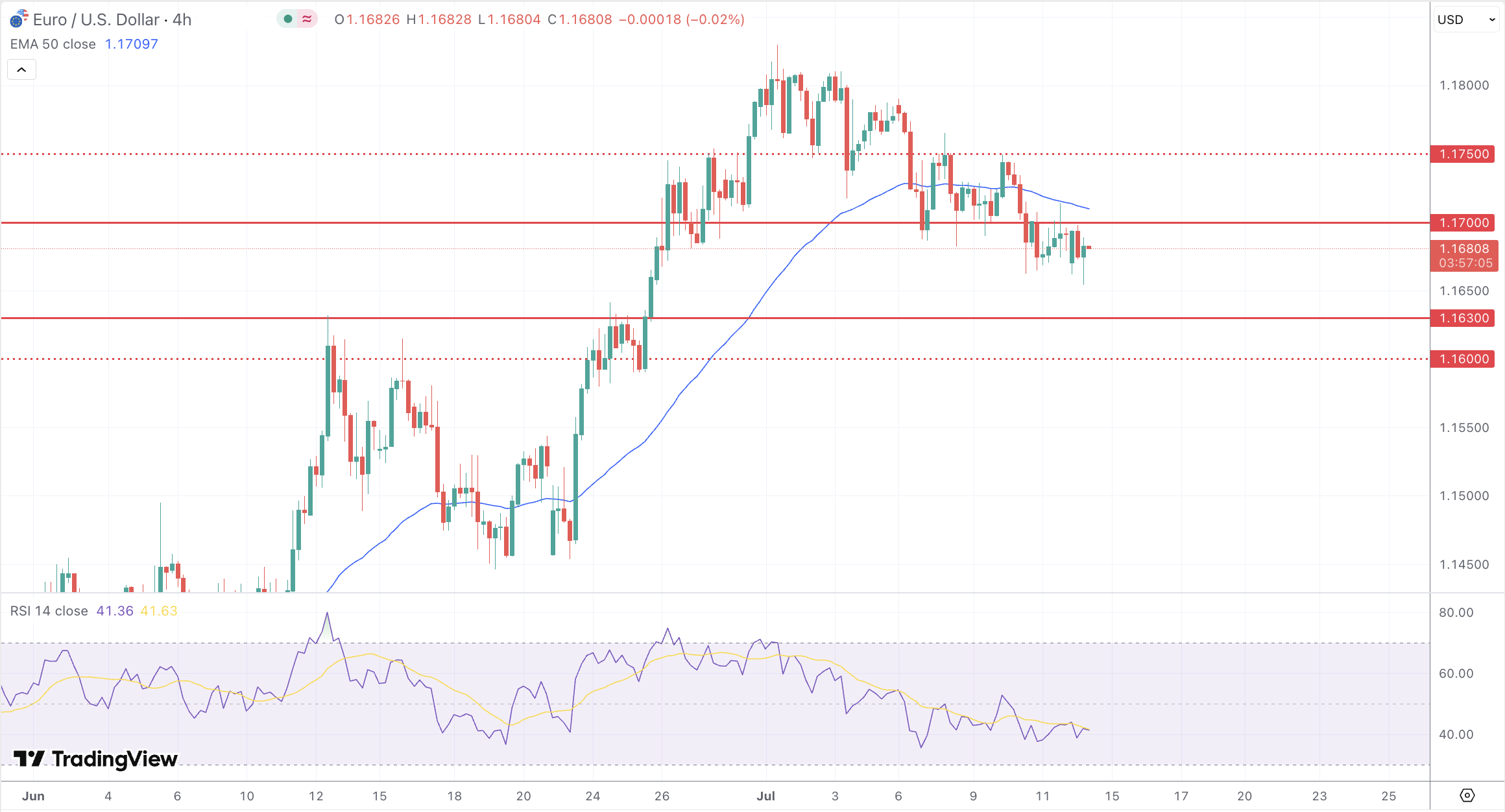
The 14-day Relative Strength Index sits near neutral territory but has shown slight bullish divergence, suggesting scope for at least a short-term rebound if price action can reclaim the 1.1700–1.1720 zone. Meanwhile, the pair is trading below its 50- and 100-period moving averages, signaling a modest bearish bias in medium-term momentum.
On the fundamental side, traders remain focused on this week’s U.S. consumer-price index release. A softer-than-expected CPI print could weaken the dollar and reignite euro buying, while hotter data may reinforce Fed-rate-cut skepticism and lend further support to the greenback. Trade-policy uncertainties also continue to underpin volatility; any escalation in tariff rhetoric is likely to prompt renewed safe-haven flows into U.S. assets, putting downward pressure on EUR/USD.
Looking Forward
In the coming week, market participants will zero in on U.S. inflation figures for fresh clues on the Federal Reserve’s policy trajectory. Should headline and core CPI figures come in below forecasts, the euro could mount a recovery attempt toward 1.1720 and potentially challenge resistance at 1.1750. Conversely, stronger-than-expected inflation could propel the dollar higher, testing euro support around 1.1630 and, if momentum builds, pushing toward the 1.1600 psychological level. Beyond U.S. data, any new developments in EU-U.S. trade talks or geopolitical flashpoints may amplify swings, reinforcing EUR/USD’s sensitivity to risk sentiment.